
New leaks reveal Valve’s Steam Frame VR headset launch is finally closing in—FCC approval, US shipments, a swelling game library, and now a developer confirming it’s “just around the corner.”
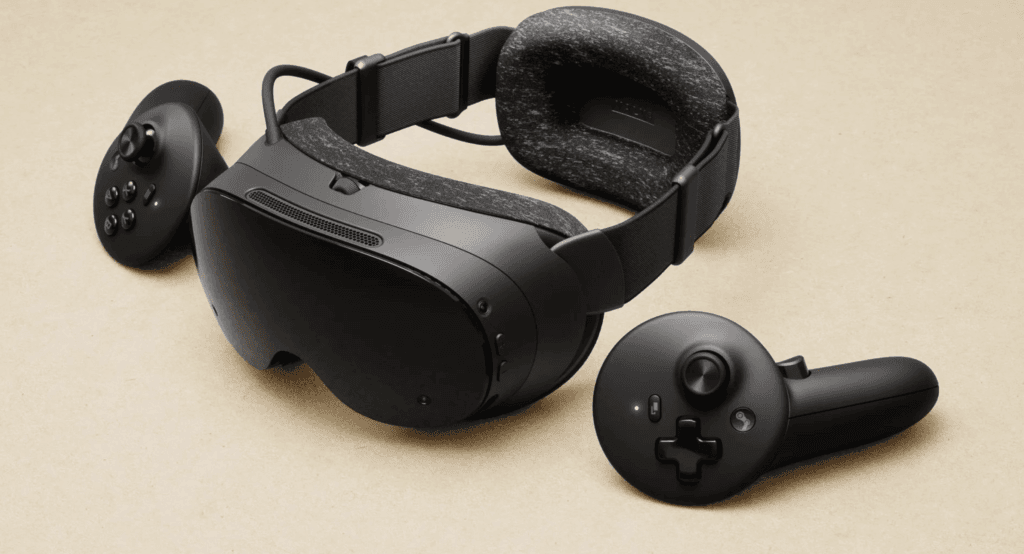
Virtual reality fans who’ve been tracking Valve’s long-rumoured Steam Frame headset may finally have something concrete to get excited about. After more than a year of leaks, teardowns, delayed timelines, and cryptic hardware sightings, all the signs are now pointing to one thing: launch is close. Really close.
Read More: The Future of Apple Head-Mounted Devices
What’s the Latest Clue?
The newest hint comes from an unlikely source — a game developer’s Discord server. The team behind Gunman Contracts, working with publisher 2080 Games, said in an FAQ that Valve’s headset release is “just around the corner,” though they clarified they can’t announce their own launch date until Valve does. It’s a small, almost offhand detail, but it fits neatly into a pattern that’s been building for weeks now, and it’s exactly the kind of leak that tends to precede an official announcement.
A Trail of Breadcrumbs
Developer hints aside, the harder evidence has been piling up steadily:
- FCC Approval: On July 29, the FCC granted approval to the device under ID 2AES4-1015 — without this certification, the headset legally cannot be sold in the US at all.
- Hardware Already Shipping: Reports suggest roughly 35 metric tons of VR hardware had already cleared US customs by June. That’s not a small test batch — that’s inventory being positioned for a real launch.
- Developer Stockpiling: The developer behind Gunman Contracts also mentioned receiving 22 separate shipments of Steam Frame devices to build up inventory ahead of launch.
- Growing Game Library: Valve introduced its “Great on Frame” badge on the Steam Store, launching July 13 with five titles and growing to around 65 games by August 10. That’s a meaningful ramp in just under a month.
- Software Support: Recent SteamOS beta notes reference “preliminary support” for the Steam Frame’s wireless adapter, one of the clearest technical signals yet that the hardware is nearing release. The adapter itself is designed to reduce interference from household Wi-Fi devices, improving latency and stability for demanding VR games streamed from a PC.
- Compatibility Testing: Even older titles are getting the once-over. Portal 2 recently picked up a “Playable” rating on SteamDB’s compatibility tool for the unreleased headset, with functional Steam Frame button glyphs and legible text rendering — though its age means it can’t hit the top verification tier due to resolution mismatches with the Frame’s native display.
Stack all of that together and it stops looking like speculation and starts looking like a company quietly finishing its homework before a big reveal.
What Is the Steam Frame, Exactly?
For anyone just catching up: the Steam Frame is the final piece of Valve’s three-part hardware push, following the Steam Machine (shipping since June 30) and the Steam Controller. It’s Valve’s first new VR headset since the 2019 Valve Index, and unlike its predecessor, Valve is betting on a fully wireless hybrid approach.
It works two ways:
- Standalone mode — running games natively on its own onboard hardware, using a Proton-like compatibility layer that lets traditionally Windows-only VR titles run on ARM.
- Wireless PC VR mode — streaming from a gaming PC over the dedicated wireless adapter for more demanding titles.
The internal hardware is heavily inspired by the Steam Deck handheld, upgraded with modern VR displays and a redesigned controller.
Under the Hood: The Specs
Here’s what we know so far about what’s actually powering the thing:
- Displays: Dual 2160×2160 LCD panels with a refresh rate between 72 and 144Hz.
- Eye Tracking: Foveated streaming powered by a pair of onboard eye-tracking cameras, so only the parts of the screen you’re actively looking at get streamed at full quality. This is a big deal for wireless VR — it’s how Valve keeps image quality high without needing console-grade bandwidth.
- Processor: A Qualcomm Snapdragon 8 Gen 3 chipset paired with 16GB of RAM — enough to run plenty of traditional Steam titles natively, though genuinely demanding VR experiences like Half-Life: Alyx will still lean on a connected PC.
- Storage: Two storage tiers, 256GB and 1TB, with expansion available via MicroSD.
- Wireless Adapter: A dual-radio adapter plugs into your PC, Steam Machine, or Steam Deck, keeping separate connections for streaming and Wi-Fi to avoid bandwidth congestion.
On paper, that’s a genuinely ambitious spec sheet — closer to a hybrid gaming handheld with a headset bolted on than a typical consumer VR device.
The Catch: Price
Here’s where the excitement cools off a bit. Component costs — memory, Qualcomm chips, NAND storage — have been climbing across the entire industry, and that’s reportedly pushing the Steam Frame’s price well above Valve’s original targets.
In a recent stream, well-known Valve leaker Tyler McVicker estimated the base unit price could now exceed $1,100 — potentially hundreds of dollars higher than earlier projections, driven by rising costs from fabricators like TSMC, Samsung, SK Hynix, and Micron. That’s a real jump from the sub-$1,000 mid-range price point Valve had originally been targeting.
It’s a familiar story for anyone who remembers the Valve Index launch. Premium VR hardware from Valve has never come cheap, and there’s no strong signal that’s about to change here.
Why This Matters for VR Right Now
The VR headset market has felt a little stagnant over the past year — plenty of incremental hardware refreshes, but nothing that’s fundamentally reshaped what a headset can do. The Steam Frame is one of the few devices with a real shot at shifting that conversation, mostly because of how it straddles categories: it’s not purely a standalone headset like a Quest, and it’s not purely a tethered PC VR rig like the original Index. It’s trying to be both, wirelessly, with the entire Steam library behind it.
If Valve nails the hybrid approach — and the eye-tracked foveated streaming is a promising sign they might — it could set a new baseline for what people expect from wireless VR performance going forward.
Will It Be Worth It?
Nothing here is official yet. Valve, true to its famously tight-lipped form, still hasn’t confirmed an exact release date or final price. But between FCC approval, tons of hardware already sitting in US warehouses, a rapidly growing compatible game library, ongoing SteamOS beta support, and now a developer all but confirming it in a Discord FAQ, this looks a lot less like “eventually” and a lot more like “any week now.”
Wrapping It Up
For VR fans who’ve been waiting patiently since the 2019 Valve Index, the Steam Frame represents Valve’s biggest swing at standalone VR yet — hybrid functionality, eye-tracked foveated streaming, and full access to the Steam library, all wrapped into one headset. The only real question left is how much it’s going to cost you to get one.
FAQ: Valve Steam Frame VR Headset
Q: When is the Steam Frame launching? A: Valve hasn’t confirmed an official date, but mounting evidence — FCC approval, shipped hardware, growing game support, and developer statements — suggests it could be just weeks away.
Q: How much will the Steam Frame cost? A: Pricing isn’t official yet, but recent leaks suggest it could exceed $1,100, notably higher than Valve’s earlier sub-$1,000 target.
Q: Can the Steam Frame play games without a PC? A: Yes. It runs as a standalone headset via its onboard Snapdragon chip, though more demanding titles will still benefit from streaming off a connected PC.
Q: What makes the Steam Frame different from other VR headsets? A: Its hybrid design — standalone and wireless PC VR in one device — combined with eye-tracked foveated streaming and full Steam library access sets it apart from most standalone competitors.
Discover more from vskel.com
Subscribe to get the latest posts sent to your email.